SESSIONS

Competing with Giants: How Southeast Asia’s Metaverse Can Win Together


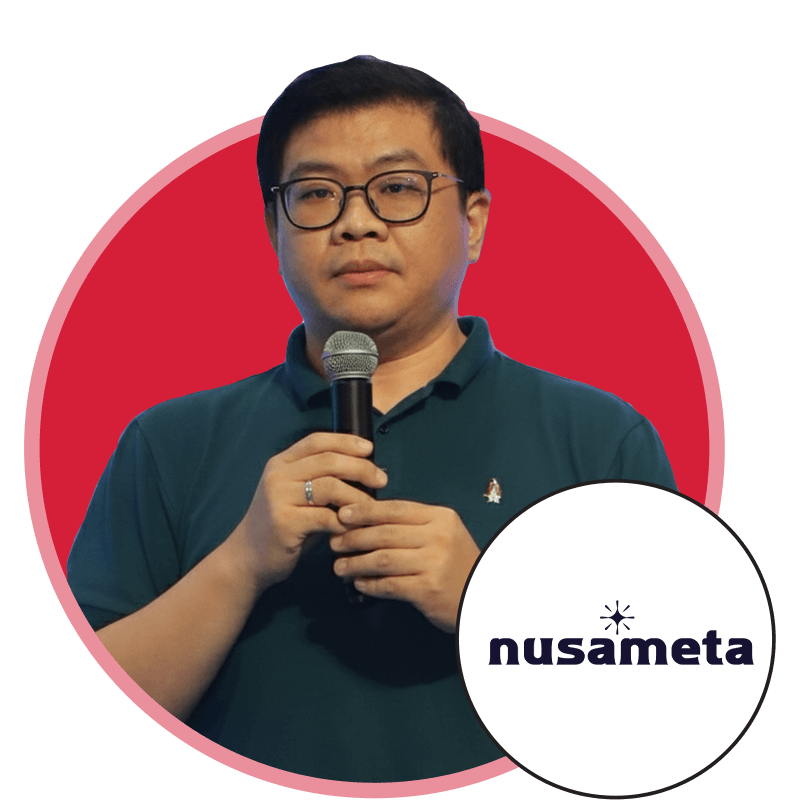
When global giants like Roblox, Fortnite, and Meta dominate the metaverse space, building something meaningful from Southeast Asia can feel almost impossible. That was the challenge Thomas Simpson faced as Head of Product at Nusameta, a metaverse company formed by WIR Group and Salim Group. His team set out to create Indonesia’s first large-scale metaverse ecosystem. Along the way, they discovered just how different the path looks when a billion-dollar infrastructure or a global user base does not back you.
This talk is an honest reflection on that journey, the slow process, the wrong turns, and the small breakthroughs that taught us how to survive beside the giants. He will share what it really took to build Nusameta from the ground up, including the challenges of fragmented infrastructure, unpredictable markets, and user expectations that do not match Western models. The early goal was to create a fun and accessible metaverse, but what they found was a deeper opportunity: connecting people through education, creativity, and community. That realization shifted their focus from entertainment to purpose, and it continues to define how they grow today. Southeast Asia’s digital landscape is complex. Every country moves at its own pace, with different cultural needs and technological gaps. But that diversity is also its strength. Through Indonesia’s experience, they have seen what it takes to turn those differences into innovation and why collaboration across the region matters more than competition.
This session is not a pitch or a technical breakdown; it is a conversation about what is real. About what it costs to build in an emerging market, what lessons are worth sharing, and how those hard-earned insights can help others move faster without starting from zero. Whether you are an investor, a developer, or someone exploring how the metaverse can create real impact, this talk is about finding common ground and proving that Southeast Asia does not need to follow the giants to win.